Exhibitions are busy places. People walk fast, glance around, stop for a moment, then move on. In that kind of setting, brands need something that speaks clearly without demanding too much time. That is where an exhibition kiosk fits in. It sits quietly in the space and does its job. It shares information, creates interest, and helps visitors understand what is being offered without a long conversation.
Over the years, kiosks have become more common at trade shows and expos. They are no longer just optional extras. Many organizers and brands now plan for them early, because they help manage space and improve how visitors move through the event.
Definition of an Exhibition Kiosk
Before going deeper, it helps to slow down and define what we are talking about.
What Is a Kiosk?
A kiosk is a small, free-standing unit placed in a public or semi-public area. It can be digital or non-digital. Some kiosks display information. Others allow people to interact, make selections, or complete simple tasks. You see kiosks in malls, airports, hospitals, and offices. The idea is simple. A kiosk gives access without needing a full desk or counter.
What Makes an Exhibition Kiosk Different?
An exhibition kiosk is designed for short-term use at events. It needs to be easy to install, easy to move, and strong enough to handle constant use over a few days. Design matters more here. Branding, colors, and layout are planned carefully. This type of kiosk must work well inside a larger exhibition stand and still stand out just enough to catch attention.
Purpose and Uses of Exhibition Kiosks
Exhibition kiosks exist for clear reasons. They solve practical problems during events.
Information and Brand Awareness
At exhibitions, staff cannot speak to everyone at once. A kiosk fills that gap. It shares key messages when no one is nearby. Visitors can read, watch, or scan content at their own pace. Over time, this builds brand awareness in a calm way. People remember what they understood easily.
Interactive Engagement at Events
Some kiosks invite visitors to interact. They tap screens, explore options, or watch short demos. This kind of engagement slows people down. It gives them a reason to stay for a few seconds longer. Even that small pause can make a difference during a crowded event.
Types of Kiosks You Should Know
Not all kiosks do the same job. Each type supports a different goal.
Self-Service Kiosks
Self-service kiosks let visitors act on their own. They can browse products, view details, or register interest. These kiosks reduce pressure on staff. They also suit visitors who prefer not to start conversations right away.
Information Kiosks
Information kiosks concentrate on disseminating information. They could be used to outline services, illustrate timetables, and point out salient features. In big shows, kiosks enable visitors to obtain answers rapidly without soliciting assistance.
Check-In / Check-Out Kiosks
These stations are responsible for managing entrance and exit operations. In most cases, these stations are used during conferences or on exhibitions. Additionally, they aid in ensuring that there is no congestion in relation to waiting.
Payment Kiosks
Payment kiosks enable visitors to transact. This can be for small sales and booking services. Clear instructions and secure systems matter here. When done right, they save time for everyone involved.
Wayfinding Kiosks
Wayfinding kiosks help navigate large venues. These kiosks provide maps, directions, and floor plans. It helps visitors feel more secure knowing which way to go. This helps create a positive experience for the event.
Internet Kiosks
Internet kiosks provide the basic facility to access the Internet. Even though they are not so common nowadays, they are still quite useful. They allow the visitor to view their mails or access essential information if the event is a long one.
Interactive Touchscreen Kiosks
Interactive touchscreen kiosks integrate design and technology. These kiosks enable greater engagement capabilities through the use of images and intuitive navigation. Most companies use such kiosks to interpret complex concepts for people.
Along with visual content, many interactive touchscreen kiosks now include interactive games to keep users involved for longer. Features like AI photo booths, AI-powered knowledge quizzes, and 3D interactive fun games make the experience more engaging and memorable. These game-based elements not only entertain users but also help brands explain information in a more relaxed and easy-to-understand way.
How Different Kiosk Types Work
Understanding how kiosks function helps when choosing the right one.
Interactive vs. Non-Interactive Kiosks
Interactive kiosks respond to user input. People touch, scroll, or select options. Non-interactive kiosks are only for display purposes. Though both have their relevance, interactive kiosks are better for engagement-related aims, whereas non-interactive kiosks are better for messaging purposes.
Digital vs. Traditional Kiosks
Digital kiosks are made up of screens and software. Traditional kiosks are composed of images and physical boards. Digital kiosks can be updated quickly. Traditional kiosks are easier to maintain and administer.
Choosing the Right Kiosk for Your Exhibition
Picking a kiosk should start with clarity, not trends.
Aligning Goals With Kiosk Features
Every exhibition has a purpose. Some focus on leads. Others focus on awareness. The kiosk should support that purpose clearly. A custom exhibition kiosk helps align design and function. This is also where working with specialists in Exhibition Stand in Dubai or a reliable kiosk supplier in UAE can help streamline decisions.
Visitor Experience and Accessibility
A kiosk should feel easy to use. Screen height, text size, and navigation all matter. Visitors should understand what to do without asking. Accessibility also plays a role. An effective exhibition stand provides evidence of planning and consideration for visitors.
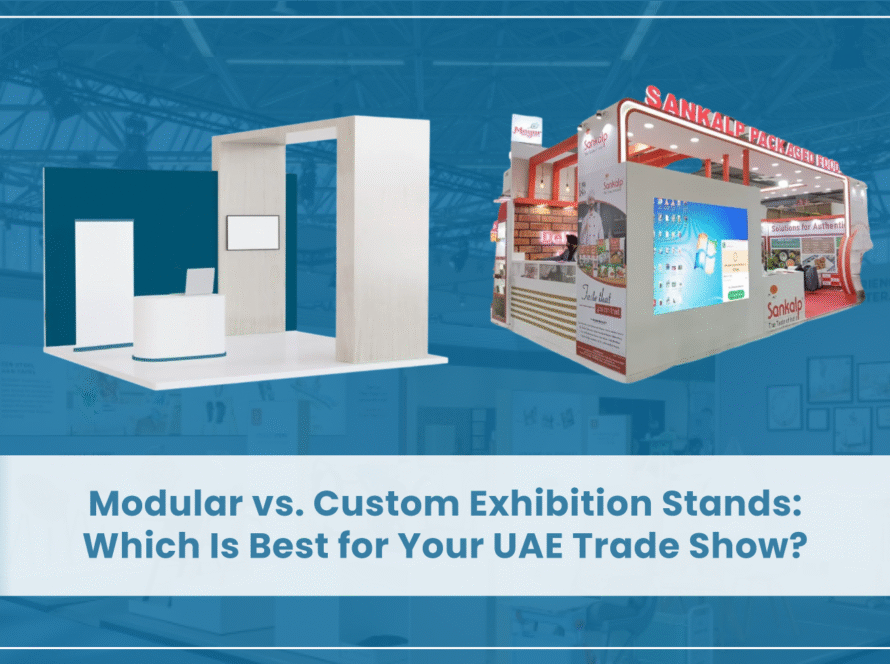
For further insights into choosing the right design for your display, explore the Modular vs. Custom Exhibition Stands breakdown on the Exhibition Stands UAE blog, which compares flexibility, cost, and branding impact for UAE trade shows.
Frequently Asked Questions
What’s the difference between a kiosk and a booth?
A booth is a full exhibition space. It includes walls, counters, and staff areas. A kiosk is smaller and more focused. Many booths include kiosks to add function without crowding the space.
Can kiosks work without staff?
Yes, many kiosks are designed for independent use. Self-service and information kiosks often operate without constant supervision. Staff can then focus on deeper discussions.
Where are kiosks most commonly used?
Kiosks are used at exhibitions, trade shows, malls, airports, and public venues. At events, they support navigation, engagement, and information sharing.
What features should an exhibition kiosk include?
It is clear that for a kiosk to be an effective marketing platform, it must have good visual appeal, a stable structure, ease of navigation, and functioning technology. It is also important to ensure that a kiosk is well incorporated into an exhibition stand ordered from an exhibition stand company or backed by a trade show booth contractor.
Conclusion: Maximizing Impact With Exhibition Kiosks
The impact of the exhibition kiosk is not small despite its size. It assists in improving the communication of brands, especially when integrated strategically within an exhibition stand dubai setup. It can easily be incorporated into the whole setup of the show without competing with the central stand if planned for properly. Most of the show teams have now adopted the concept of the exhibition kiosk as a significant aspect of their show plans. The planning and coordination of kiosks ensure a smoother show experience.