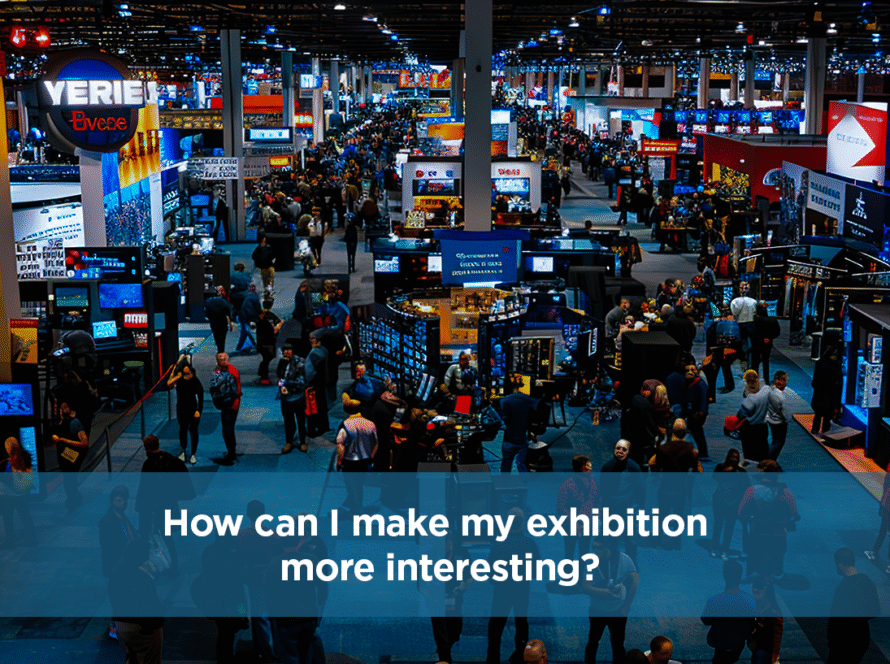
Exhibition stands are branded booth structures used by businesses at trade shows, expos, and industry events to showcase products, meet potential clients, and build brand visibility.
There are different types of exhibition stands that vary in size, layout, structure, and functionality depending on the event goals, floor space, and budget.
Types of Exhibition Stands: Quick Comparison
| Stand Type | Best For | Budget Level | Open Sides | Typical Space |
| Shell Scheme | First-time exhibitors | Low | 1 | 9–20 sqm |
| Modular | Frequent exhibitors | Mid | Flexible | Small–Large |
| Custom/Bespoke | Large brands | High | Flexible | Medium–Large |
| Portable | Roadshows & small events | Low | 1 | Under 10 sqm |
| Inline/Row | Standard trade show booths | Low–Mid | 1 | 6–18 sqm |
| Corner | Better visibility | Mid | 2 | 12–20 sqm |
| Peninsula | Product demos | Mid–High | 3 | 20–40 sqm |
| Island | Flagship exhibition presence | High | 4 | 36 sqm+ |
| Double-Decker | Enterprise exhibitors | Very High | 2–4 | 100 sqm+ |
| Sustainable | ESG-focused brands | Mid–High | Flexible | Any |
Choosing the right exhibition stand type is one of the most important decisions an exhibitor makes because it directly affects visitor engagement, lead generation, and overall exhibition ROI.
The Main Types of Exhibition Stands
1. What is a Shell Scheme Exhibition Stand?
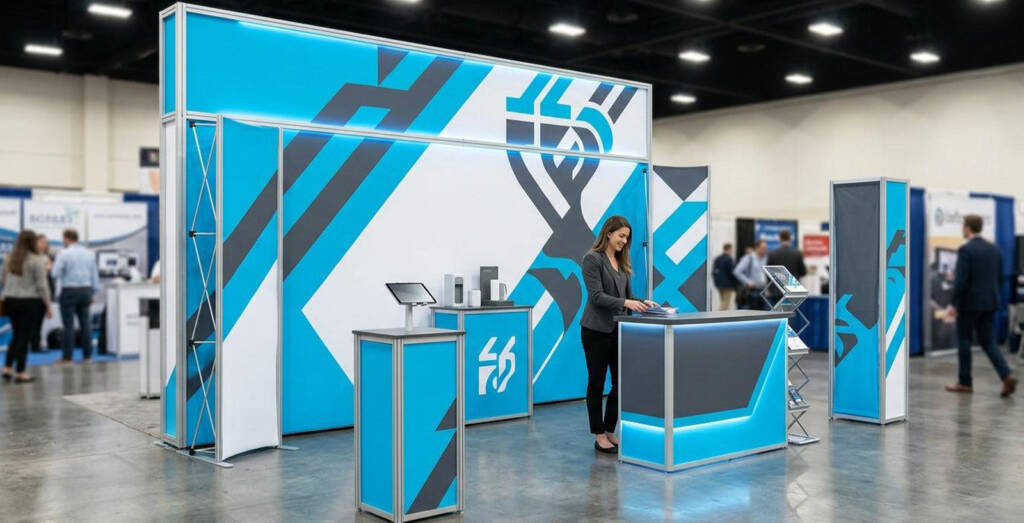
A shell scheme exhibition stand is a pre-built modular booth structure provided by exhibition organisers. These types of exhibition stands typically includes aluminum framing, wall panels, fascia signage, carpeting, and basic lighting. Shell scheme stands are commonly used by first-time exhibitors and businesses with smaller budgets.
Best For
- First-time exhibitors
- Small businesses
- Budget-conscious brands
Advantages of Shell Scheme Stands
- Lower setup cost
- Easy installation
- Organiser-managed structure
- Fast setup process
Limitations
- Limited design flexibility
- Standardised structure
- Reduced visual uniqueness
Typical Features
- Aluminium framework
- White infill panels
- Fascia name board
- Basic lighting and power
Typical Cost
The shell scheme structure is usually included in the exhibition package. Branding and graphics typically range from £500 to £5,000+ depending on complexity.
Shell scheme stands are the most cost-effective exhibition option for businesses attending trade shows with smaller budgets or limited exhibition experience.
2. What is a Space Only Exhibition Stand?
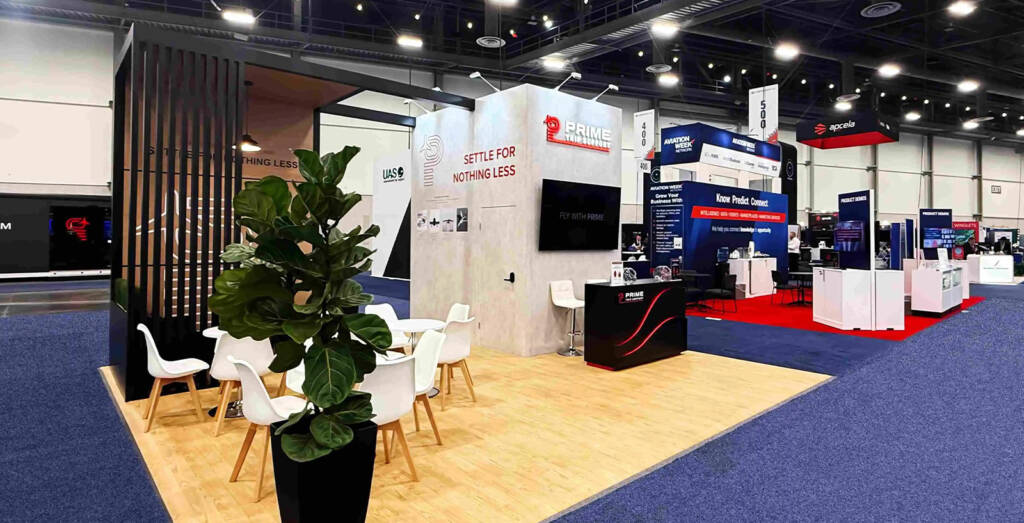
A space only exhibition stand — also called raw space or bare space — is an empty floor area rented from the exhibition organiser without any built structure. Exhibitors must design and construct the entire stand independently using an exhibition stand contractor.
Best For
- Established brands
- Large-scale exhibitors
- Businesses needing full creative freedom
Advantages
- Unlimited design flexibility
- Strong brand differentiation
- Custom layouts and architecture
- Better visitor experience potential
Limitations
- Higher cost
- Longer lead times
- Complex logistics and approvals
Typical Features
- Custom flooring
- Bespoke structures
- Meeting rooms
- LED walls and digital integrations
Typical Cost
Custom raw space builds generally start from £10,000–£15,000 and can exceed £150,000 for flagship international exhibitions.
Space only stands offer maximum creative freedom and are ideal for brands that want a fully customised exhibition experience.
3. What is a Modular Exhibition Stand?
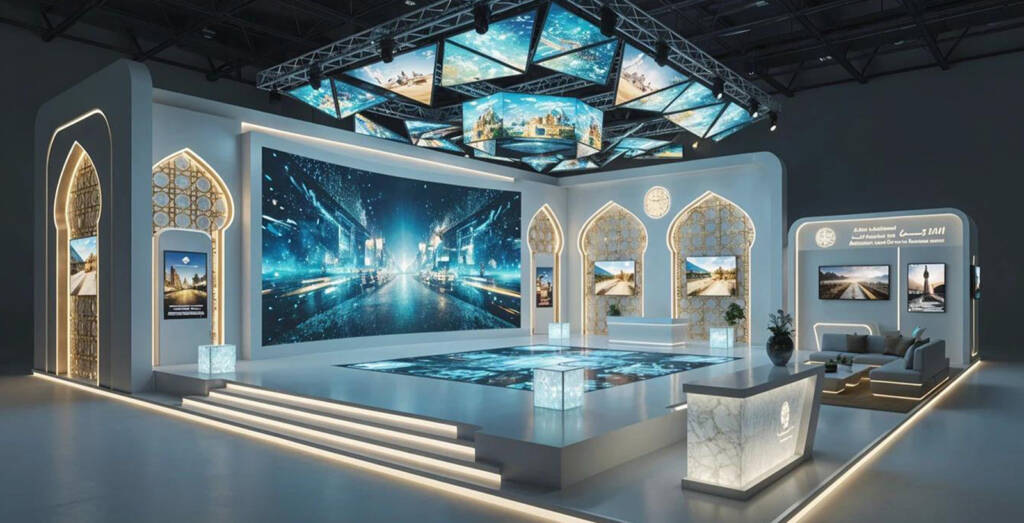
A modular exhibition stand is a reusable booth system built using interchangeable components that can be reconfigured for different exhibitions and booth sizes. Modular stands are popular among companies that exhibit frequently throughout the year.
Best For
- Regular exhibitors
- Multi-event businesses
- Sustainability-focused companies
Advantages
- Reusable structure
- Flexible configurations
- Lower long-term cost
- Sustainable exhibition solution
Limitations
- Less architectural freedom than bespoke builds
- Some design restrictions
Typical Features
- Interlocking frames
- Fabric graphics
- LED lighting
- Reconfigurable layouts
Typical Cost
Initial investment typically ranges between £5,000–£30,000+, with lower costs for future reuse.
Modular exhibition stands are ideal for businesses attending multiple exhibitions annually and can also include an exhibition kiosk for better visitor interaction.
4. What is a Custom or Bespoke Exhibition Stand?
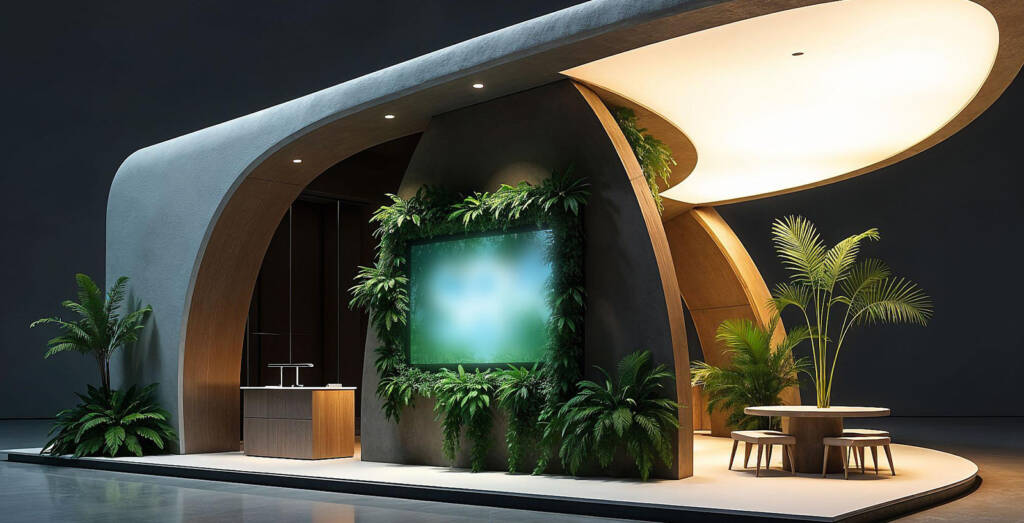
A custom exhibition stand is a fully bespoke booth designed specifically for a single brand and exhibition objective. Every element — from structure and materials to lighting and layout — is uniquely created for the exhibitor.
Best For
- Large brands
- Product launches
- Premium trade shows
Advantages
- Maximum visual impact
- Unique brand experience
- High visitor engagement
- Unlimited design possibilities
Limitations
- High investment
- Long production timeline
- Storage and reuse challenges
Typical Features
- Custom architecture
- Interactive technology
- Private meeting rooms
- Brand storytelling zones
Typical Cost
Custom exhibition stands generally start around £15,000 and can exceed six figures for large-scale builds.
Custom types of exhibition stands and a custom exhibition kiosk are best suited for brands seeking strong differentiation and premium exhibition visibility.
5. What is a Portable Exhibition Stand?
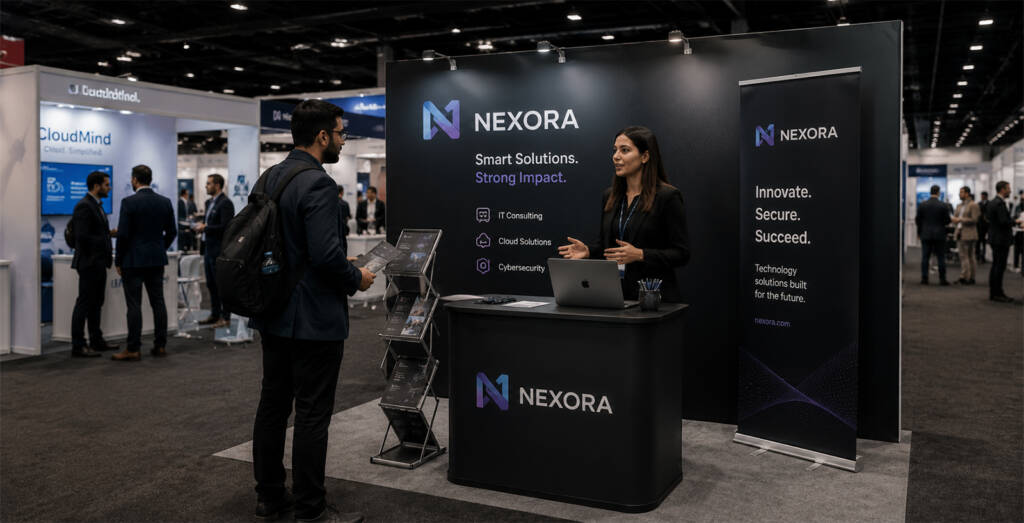
Portable exhibition stands are lightweight display systems designed for easy transport, quick setup, and smaller event environments. They are commonly used for roadshows, networking events, and local trade exhibitions.
Best For
- Sole traders
- Small teams
- Regional exhibitions
- Networking events
Advantages
- Easy transport
- Quick installation
- Affordable
- Minimal logistics
Limitations
- Limited visual impact
- Not suitable for large exhibition halls
Typical Features
- Pull-up banners
- Fabric displays
- Folding frames
- Carry cases
Typical Cost
Portable displays range from under £100 to approximately £5,000 depending on quality and scale.
Portable exhibition stands are practical, affordable solutions for businesses attending smaller events frequently.
6. What is an Inline Exhibition Stand?

An inline exhibition stand — also called a row stand — is positioned between neighbouring exhibitors with one open side facing the aisle. This is one of the most common booth layouts used in trade shows worldwide.
Best For
- Standard exhibition halls
- Budget-conscious exhibitors
- B2B trade shows
Advantages
- Cost-effective
- Widely available
- Easy to plan
Limitations
- Limited visibility
- Single-sided visitor access
Typical Features
- Back-wall graphics
- Front-facing layout
- Shared side walls
Inline stands are practical and affordable exhibition solutions for businesses exhibiting in standard trade show environments.
7. What is a Corner Exhibition Stand?
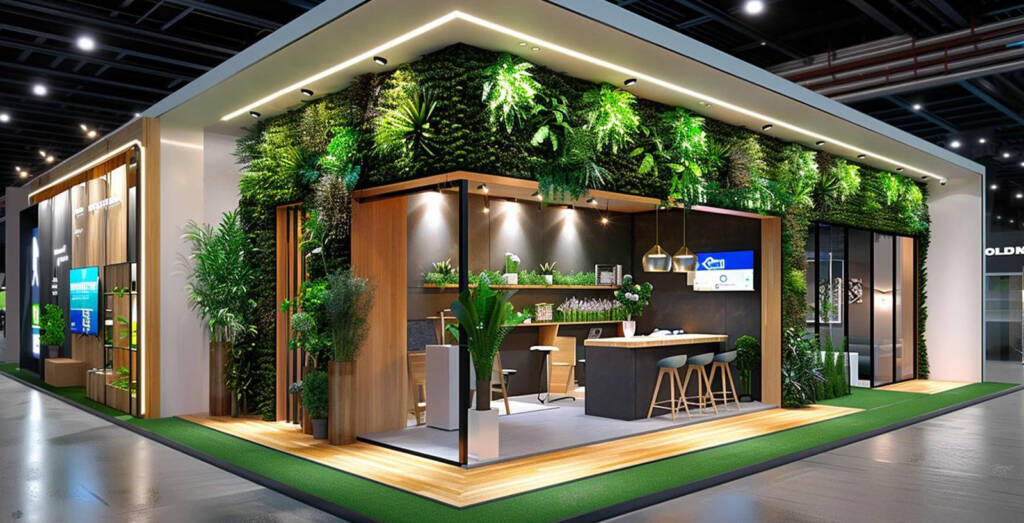
A corner exhibition stand is located where two aisles intersect, giving the booth two open sides and greater visibility than a standard inline stand.
Best For
- Mid-tier exhibitors
- Product displays
- Businesses wanting better visibility
Advantages
- Increased footfall
- Better visitor flow
- Improved visibility
Limitations
- Slightly higher cost than inline stands
Corner stands provide a strong balance between visibility, accessibility, and budget efficiency.
8. What is a Peninsula Exhibition Stand?
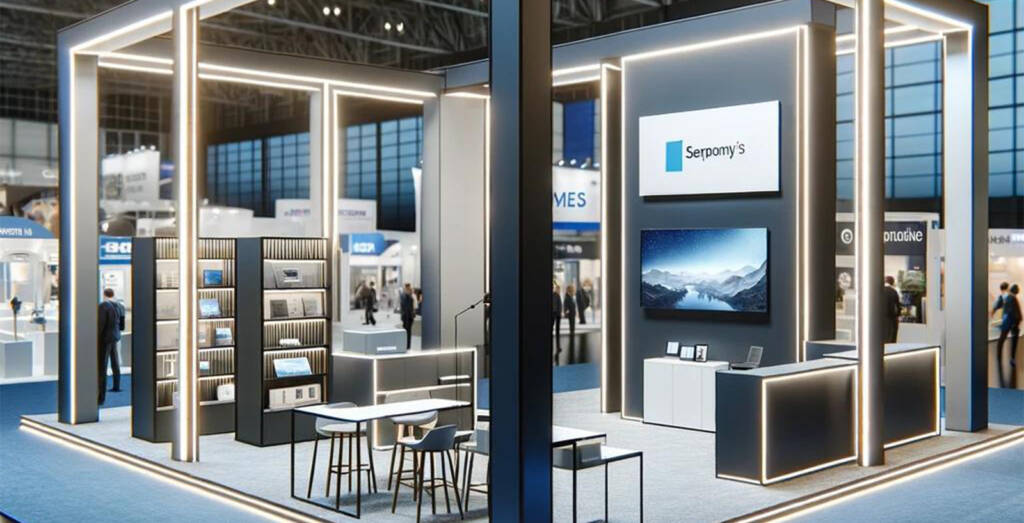
A peninsula exhibition stand has three open sides and one shared back wall. It provides higher visibility and visitor accessibility than inline or corner booths.
Best For
- Technology companies
- Consumer brands
- Product demonstration areas
Advantages
- High visitor exposure
- Better crowd flow
- Strong branding opportunities
Limitations
- Larger space requirements
- More complex layout planning
Peninsula stands are ideal for brands requiring open interaction, an exhibition kiosk, and immersive visitor experiences.
9. What is an Island Exhibition Stand?
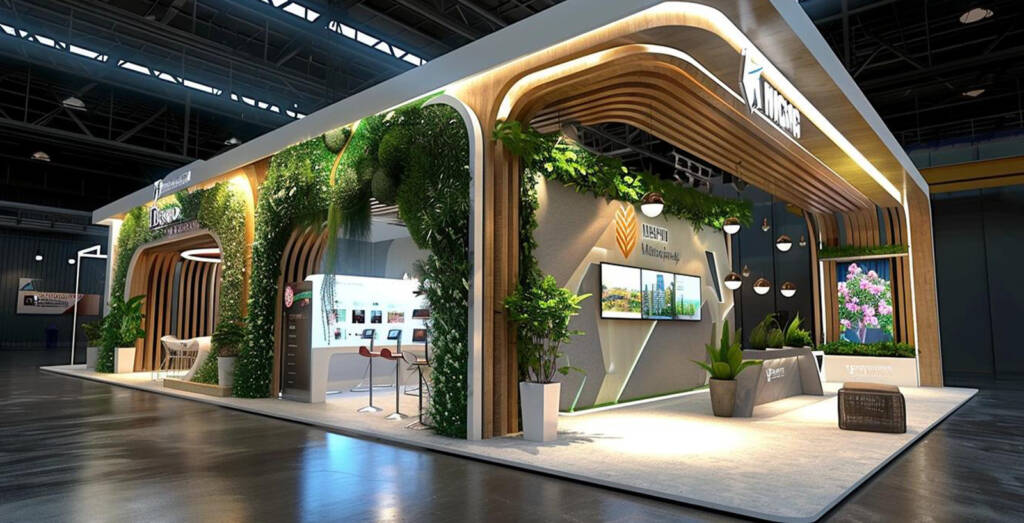
An island exhibition stand is a booth configuration with all four sides open to surrounding aisles. It offers maximum visibility, 360-degree visitor access, and extensive design flexibility.
Best For
- Flagship trade shows
- Enterprise brands
- Large-scale activations
Advantages
- Maximum visibility
- Full creative freedom
- Strong visitor engagement
- 360-degree access
Limitations
- High cost
- Complex logistics
- Large floor space requirement
Typical Cost
Island stands generally require significant investment and are commonly used at major international exhibitions.
Island exhibition stands deliver the strongest visual presence and visitor accessibility on the exhibition floor.
10. What is a Double-Decker Exhibition Stand?
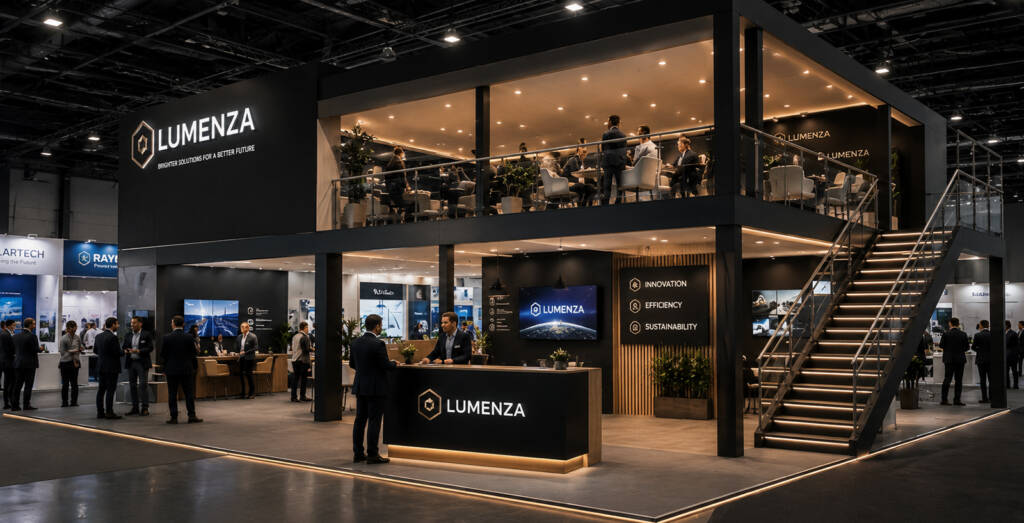
A double-decker exhibition stand is a two-storey booth structure designed to maximise usable exhibition space vertically.
Best For
- Enterprise exhibitors
- Meeting-heavy exhibitions
- Premium brand experiences
Advantages
- Increased floor space
- VIP meeting areas
- Strong visual dominance
Limitations
- Structural approvals required
- Very high investment
- Minimum space requirements
Typical Cost
Double-decker exhibition stands typically start from £40,000–£50,000+.
Double-decker stands are ideal for large brands needing premium meeting and hospitality space at major exhibitions.
11. What is a Sustainable Exhibition Stand?
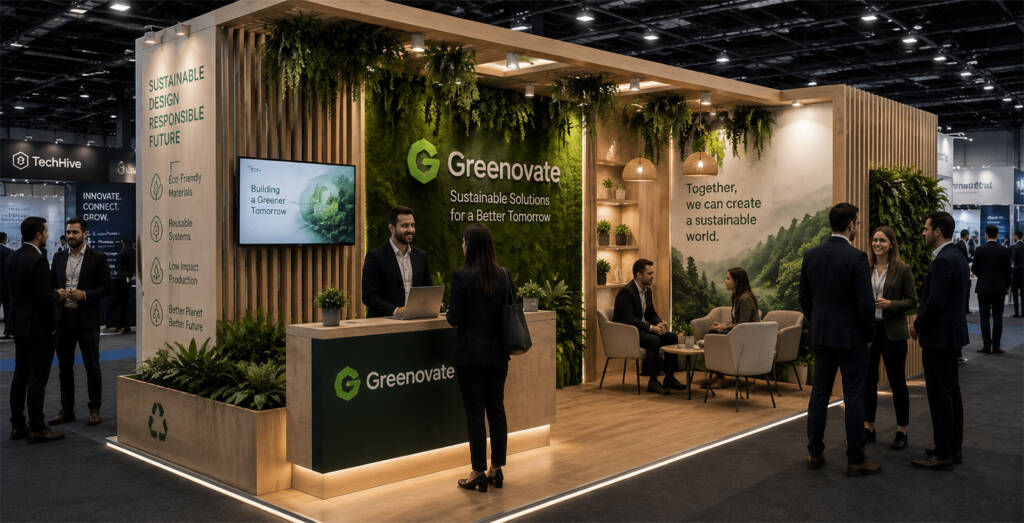
A sustainable exhibition stand is designed using eco-friendly materials, reusable systems, and environmentally responsible production methods.
Best For
- ESG-focused businesses
- Sustainability-driven brands
- Long-term exhibitors
Advantages
- Reduced environmental impact
- Reusable components
- Positive brand perception
Limitations
- Requires long-term planning
- Some materials may carry premium costs
Typical Features
- Recycled materials
- LED lighting
- Fabric graphics
- Modular reusable systems
Sustainable exhibition stands help brands reduce environmental impact while maintaining professional exhibition quality.
Which Type of Exhibition Stand Is Best for Your Business?
Choose an exhibition stand Dubai solution that matches your floor space, budget, and event goals.
| Business Goal | Recommended Stand Type |
| First-time exhibiting | Shell Scheme |
| Frequent exhibitions | Modular |
| Product demonstrations | Peninsula or Island |
| Networking events | Portable |
| Premium brand positioning | Custom or Island |
| Sustainability focus | Modular or Sustainable |
| Private meetings | Double-Decker |
How to Choose the Right Type of Exhibition Stand?
The right exhibition stand Design should balance visual appeal, available floor space, visitor movement and your overall exhibition objectives.
1. Your Exhibition Budget
Consider:
- stand build
- transport
- installation
- graphics
- furniture
- electrical setup
2. Exhibition Frequency
Frequent exhibitors benefit more from reusable modular systems.
3. Floor Space Allocation
Your booth position determines which stand configurations are possible.
4. Visitor Experience Goals
Choose a stand type based on whether your goal is:
- product demos
- networking
- brand awareness
- lead generation
- private meetings
- custom exhibition kiosk
5. Competitor Presence
Evaluate how competitors present themselves at the same exhibition before finalising your booth strategy.
Common Mistakes When Choosing Exhibition Stands
Choosing a Stand Before Confirming Booth Position
Always confirm whether your booth is inline, corner, peninsula, or island before finalising the design.
Underestimating Total Costs
Exhibition costs extend beyond the booth structure itself.
Prioritising Design Over Functionality
Visitor flow, seating, and usability are more important than visual theatre alone.
Using Portable Displays at Premium Trade Shows
A small portable setup can weaken brand perception at large-scale industry events.
Ignoring Venue Regulations
Always confirm venue rules regarding:
- stand height
- rigging
- structural approvals
- fire safety
Frequently Asked Questions
What is the most cost-effective exhibition stand type?
Shell scheme stands are typically the most cost-effective option for occasional exhibitors, while modular stands offer the best long-term ROI for frequent exhibitors.
What is the difference between modular and custom exhibition stands?
Modular stands use reusable interchangeable components, while custom stands are fully bespoke structures designed specifically for one brand or event.
Which type of exhibition stand is best for product demonstrations?
Peninsula and island stands are usually best for product demonstrations because they allow open access from multiple sides.
Are modular exhibition stands reusable?
Yes. Modular exhibition stands are specifically designed for reuse across multiple exhibitions and booth sizes.
How long does it take to build a custom exhibition stand?
Most custom exhibition stands require 8–12 weeks from approved design to final installation.
Are sustainable exhibition stands more expensive?
Not necessarily. Many sustainable modular systems reduce long-term exhibition costs due to reusability and lower material waste.
Final Thoughts
There is no single “best” exhibition stand type for every business. The right choice depends on your exhibition goals, budget, visitor experience strategy, and event frequency.
A well-planned modular stand can outperform an expensive custom build if it aligns better with the exhibitor’s objectives and audience expectations.
Whether you choose a shell scheme, modular system, custom island stand, or sustainable exhibition solution, success ultimately comes from matching the stand type to your business needs and executing it professionally. If you are planning your next exhibition stand in Dubai or the UAE, our team can help you choose the right types of exhibition stands based on your event goals, budget, and exhibition strategy.